Freshwater Fish of Connecticut
Calico Bass (White)
Pomoxis annularis
Also called: White Crappie, White Calico Bass
Identification
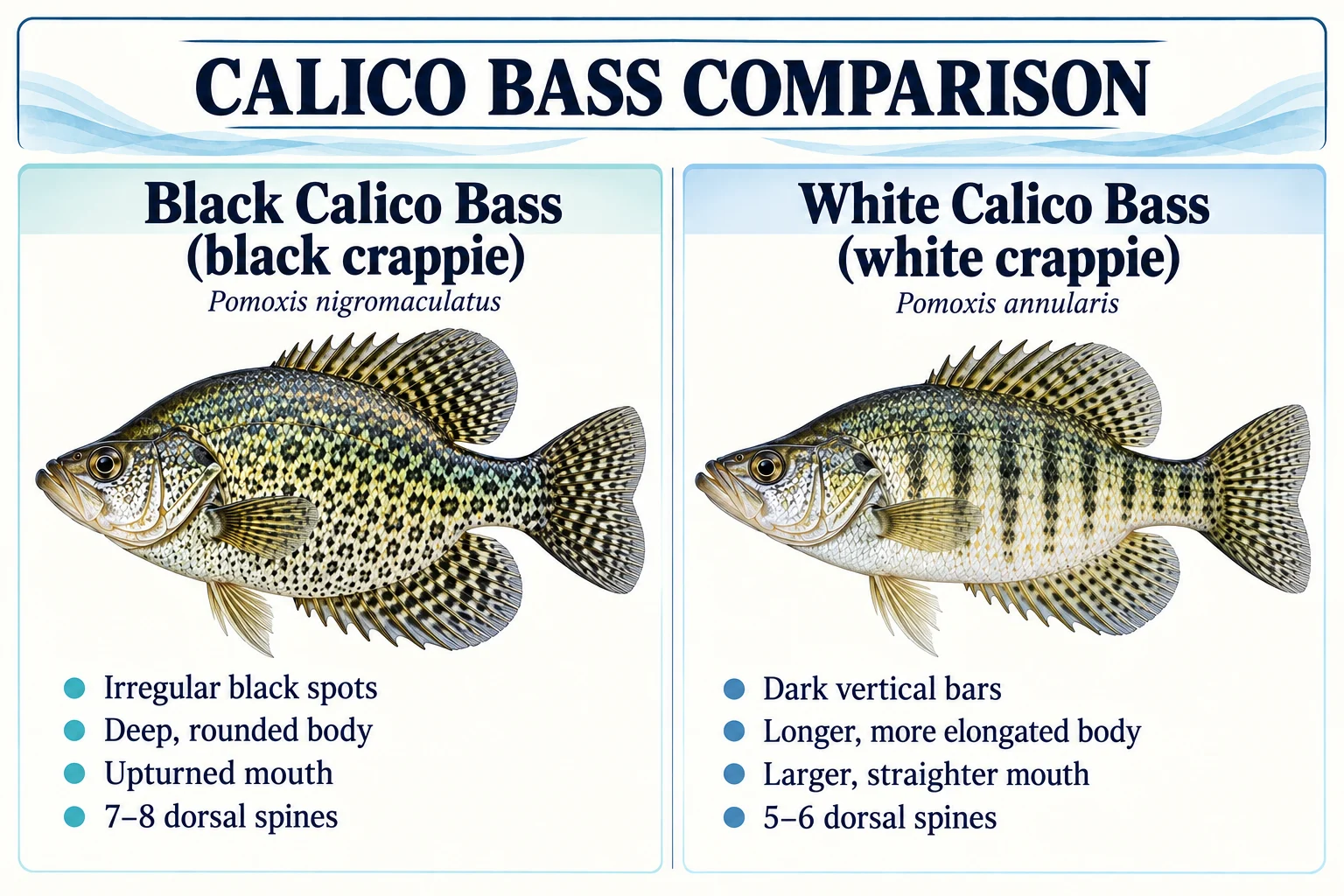
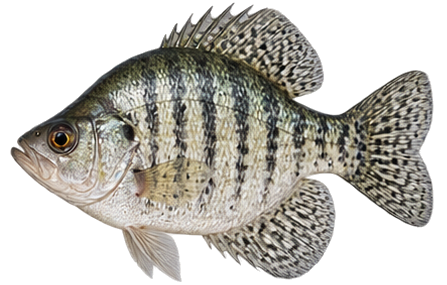
Dark markings that form vertical bands on a silvery-olive body. Longer, more elongated body, larger and straighter mouth, and 5–6 dorsal spines.
Habitat
Slow-moving lakes and rivers. Tolerates murkier water and is less dependent on cover than the black calico bass. In Connecticut it is much more restricted: CT DEEP’s published account documents it in the Connecticut River from Wethersfield north to Massachusetts (based on DEEP’s older fish guide, not a new statewide survey).
Behavior
Eats small fish, aquatic insects and crustaceans. Spawns in shallow water in spring.
How to Catch
Small jigs and live minnows — the same methods as the black calico bass — in slower, murkier stretches of the Connecticut River and its backwaters.
Notes
Easy to mix up with the black calico bass: look for vertical bands and count the dorsal spines (5–6).
Calico Bass Comparison