
Protect Connecticut waters
Invasive Species
Zebra mussels, hydrilla, mitten crabs and rock snot are already here. Anglers and boaters are the first line of defense — here’s what to look for and what the law requires.
⚖️ What the law says
- You must inspect your boat and trailer and remove all visible vegetation and invasive species before transporting it (CGS 15-180) — up to $100 per violation.
- It is illegal to transport zebra mussels, quagga mussels, Chinese mitten crabs, New Zealand mud snails, Asian clams and rusty crayfish on a boat or trailer.
- Buying, selling, moving or growing listed invasive plants (hydrilla, milfoils, fanwort, water chestnut, curly-leaf pondweed and others) can mean a $50 fine per plant.
- Registered boats on inland waters need an AIS Stamp: $7 individual stamp or $25 vessel decal, sold with fishing licenses. Out-of-state boats too. Fine for not having one: $103.
🔎 Know them on sight
Animal · freshwater · Illegal to transport
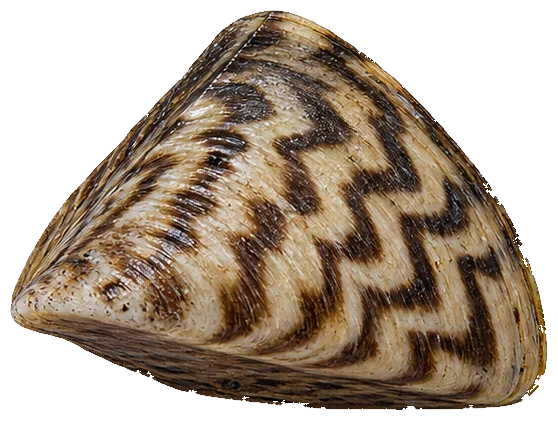
Zebra Mussel
Dreissena polymorpha
How to spot it: Small (under 1½″) D-shaped mussel with black-and-white zigzag stripes, attached in clusters to rocks, docks and boats.
Where in CT: East and West Twin Lakes (Salisbury, since 1998), Lake Lillinonah, Lake Zoar and Lake Housatonic.
Why it matters: Clogs water intakes, coats docks and boat hulls, filters out the plankton young fish need and cuts feet on swimming beaches.
On our map: East Twin Lake, West Twin Lake, Lake Lillinonah, Lake Zoar, Lake Housatonic
Animal · freshwater · Illegal to transport
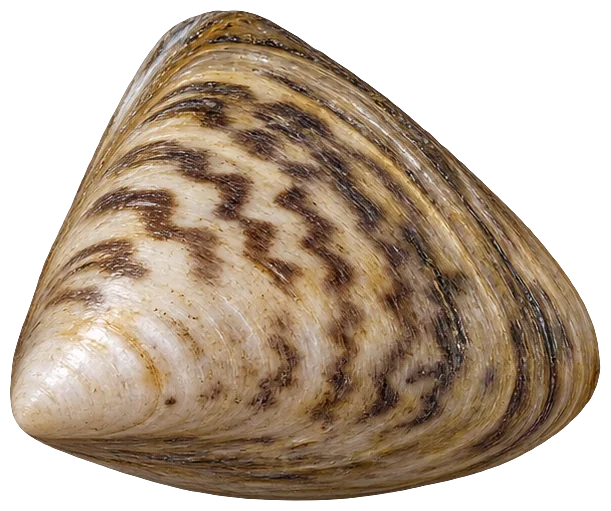
Quagga Mussel
Dreissena bugensis
How to spot it: Very similar to the zebra mussel but rounder, paler and without a flat underside.
Where in CT: On CT DEEP’s prohibited list — keep it out.
Why it matters: Same damage as zebra mussels, and it can live in deeper, colder water.
Animal · fresh & salt · Illegal to transport
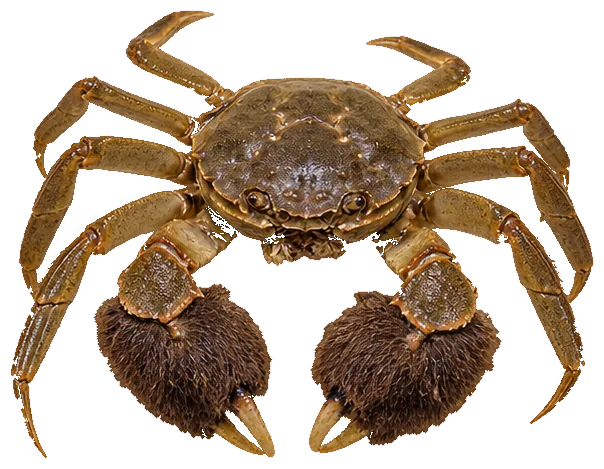
Chinese Mitten Crab
Eriocheir sinensis
How to spot it: Brownish-orange to greenish-brown shell; hairy, white-tipped claws that look like mittens; a notch between the eyes; four spines on each side; legs twice as long as the shell is wide. Any crab in fresh water in New England should be reported.
Where in CT: First confirmed in CT in 2012 at the Mianus Pond fishway (Greenwich).
Why it matters: Damages fishing gear, clogs pumps and intakes, erodes riverbanks by burrowing and out-competes native species.
What to do: Do not release it. Freeze it or keep it in alcohol, note date and place, and report within 48 hours: david.molnar@ct.gov or 860-434-6043, or on DEEP’s Marine Aquatic Invasive Species (MAIS) Survey app.
Animal · freshwater · Illegal to transport
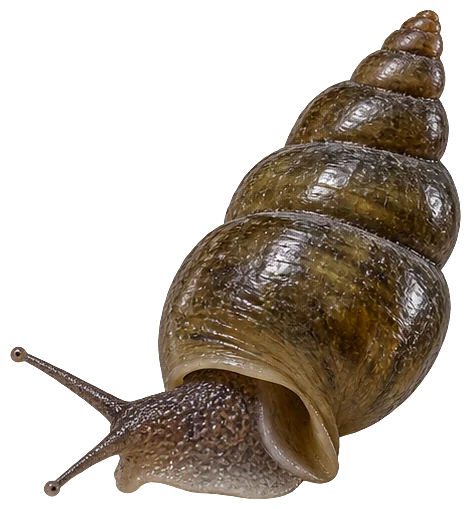
New Zealand Mud Snail
Potamopyrgus antipodarum
How to spot it: A tiny (⅛–¼″) brown to black, cone-shaped snail with 5–6 whorls. Easily hitchhikes in wader felt and boot laces.
Where in CT: On CT DEEP’s prohibited list.
Why it matters: Reaches huge densities and crowds out the insects trout feed on.
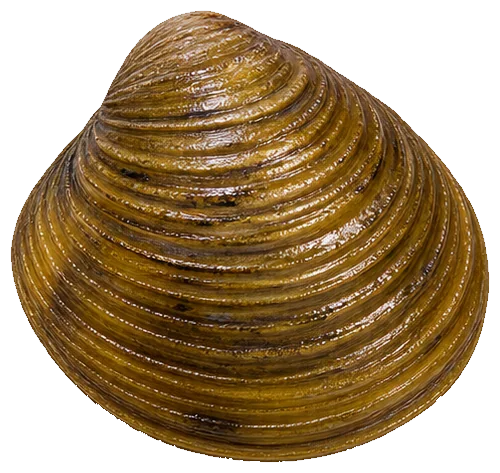
Animal · freshwater · Illegal to transport
Asian Clam
Corbicula fluminea
How to spot it: Small yellow-brown to black clam with thick, evenly spaced ridges on the shell.
Where in CT: On CT DEEP’s prohibited list.
Why it matters: Spreads fast, clogs intakes and competes with native mussels.
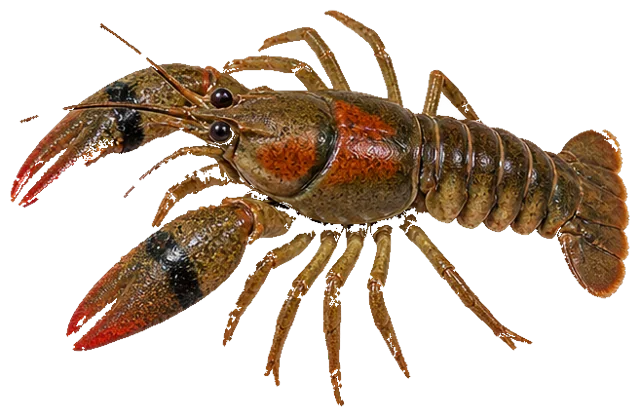
Animal · freshwater · Illegal to transport
Rusty Crayfish
Faxonius (Orconectes) rusticus
How to spot it: Large, grayish-green crayfish with a rusty red spot on each side just in front of the tail and black bands on the claw tips.
Where in CT: Spread mainly through bait buckets.
Why it matters: Eats the insects stream fish depend on and mows down aquatic plant beds that shelter young game fish.
What to do: Never use crayfish from one water as bait in another.
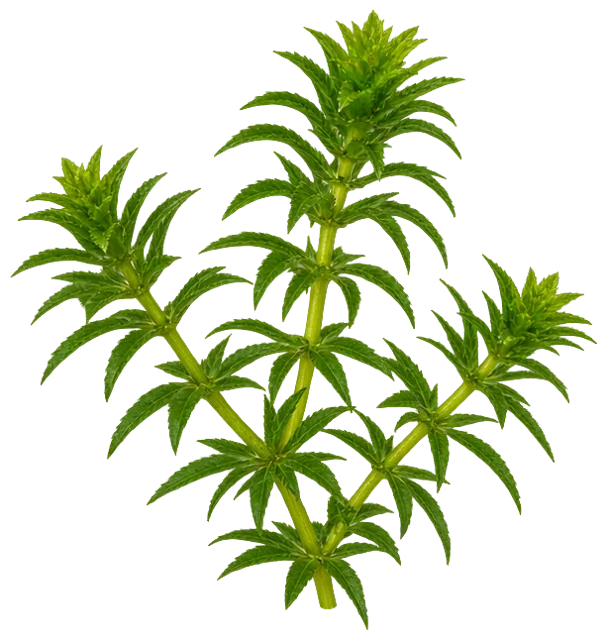
Plant · freshwater
Hydrilla
Hydrilla verticillata
How to spot it: Leaves in whorls of 5 around the stem (4–10 for the Connecticut River strain), lance-shaped with toothed edges. Forms dense, branched mats at the surface and small buds called turions.
Where in CT: Connecticut River since 2016 and spreading: Amos Lake, Bashan Lake, Congamond Lake, Coventry Lake, East Twin Lake, Gardner Lake, Middle Bolton Lake, Pachaug Pond, Pameacha Pond, Pocotopaug Lake and Lake Lillinonah. Look for the hydrilla warning sign at boat launches.
Why it matters: Grows fast, chokes out native plants, makes boating and fishing nearly impossible. Any fragment can start a new colony.
On our map: Amos Lake, Bashan Lake, Congamond Lake, Coventry Lake, East Twin Lake, Gardner Lake, Pachaug Pond, Lake Pocotopaug, Lake Lillinonah
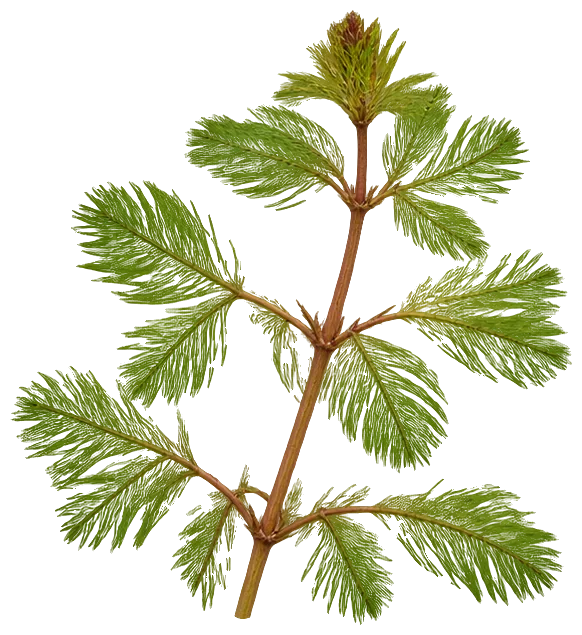
Plant · freshwater
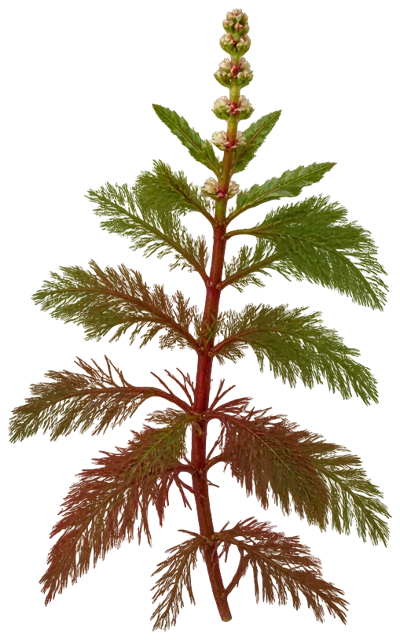
Eurasian Water Milfoil
Myriophyllum spicatum
How to spot it: Feathery leaves in whorls of four around a tan or reddish stem; a reddish flower spike above the water.
Where in CT: Over 40 CT lakes and ponds and the Connecticut River (since 1979).
Why it matters: Thick surface mats tangle props and lines and change the whole lake.
Plant · freshwater
Variable-Leaf Milfoil
Myriophyllum heterophyllum
How to spot it: Thick red stem with feathery submerged leaves; flower spikes poke above the surface.
Where in CT: About 30 CT lakes and ponds.
Why it matters: Dense mats that interfere with boating, swimming and fishing.
Plant · freshwater
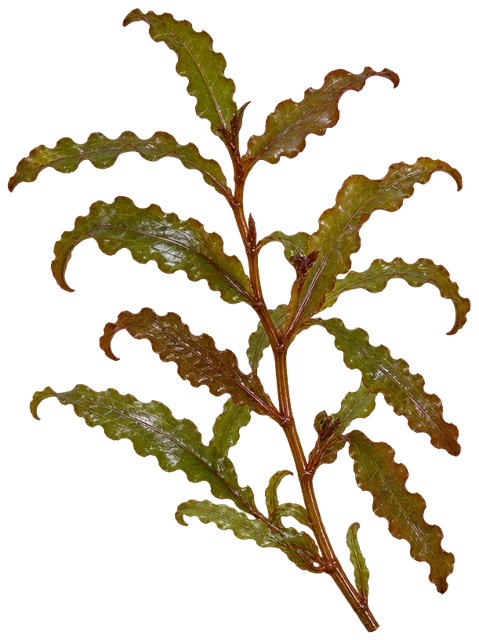
Curly-Leaf Pondweed
Potamogeton crispus
How to spot it: Flattened stem with alternate, stalkless leaves that have wavy, crinkled edges. Often dies back by mid-summer.
Where in CT: About 40 CT lakes and ponds plus the Connecticut and Housatonic rivers.
Why it matters: Early-season mats; its die-off can fuel algae blooms.
Plant · freshwater
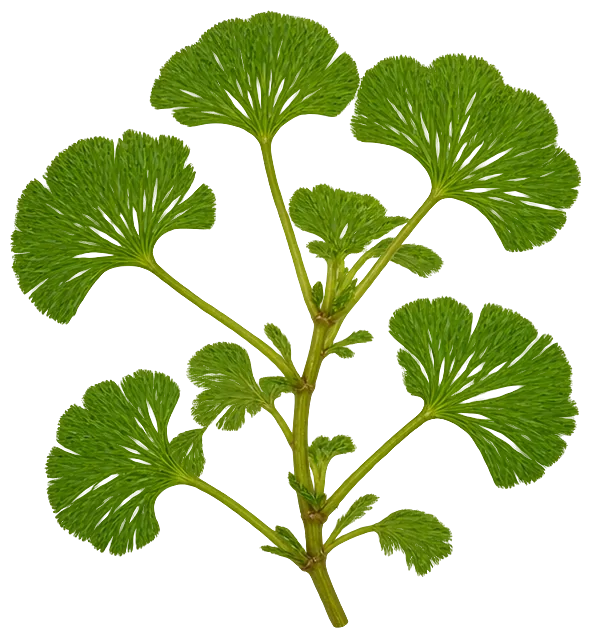
Fanwort
Cabomba caroliniana
How to spot it: Fan-shaped, finely divided submerged leaves in opposite pairs; small white or pinkish flowers at the surface.
Where in CT: More than 30 CT lakes and wetlands along the Connecticut River.
Why it matters: Spreads by fragments and fills in shallow coves.
Plant · freshwater
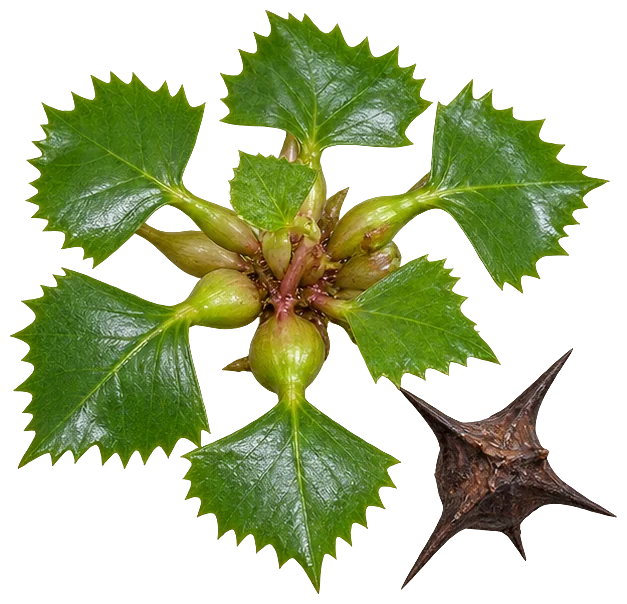
Water Chestnut
Trapa natans
How to spot it: Floating rosettes of triangular, toothed leaves; sharp, spiny nuts that wash ashore.
Where in CT: Connecticut River coves from Hartford to Lyme (White Oaks, Keeney and Hamburg coves), the Mattabesset, Hockanum and Podunk rivers, Mudge Pond and scattered small ponds.
Why it matters: Solid mats make fishing and boating nearly impossible; the spiny nuts cause painful wounds.
What to do: Report it to Harry Yamalis at 860-424-3034 or harry.yamalis@ct.gov.
On our map: Mudge Pond
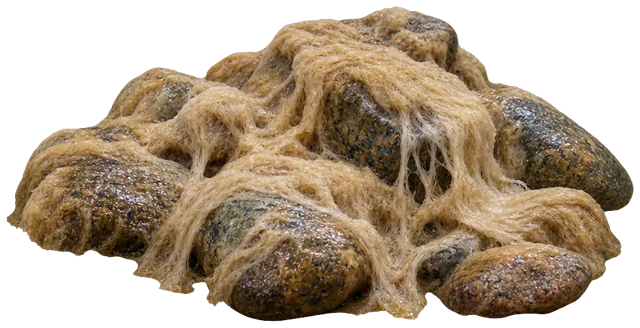
Algae · streams
Rock Snot (Didymo)
Didymosphenia & Cymbella diatoms
How to spot it: Thick, wet-wool-like mats on the bottom of cold, clear streams. Feels like wet cotton, not slimy.
Where in CT: West Branch Farmington River (Barkhamsted to the New Hartford line).
Why it matters: Smothers the stream bottom and the insects trout feed on.
What to do: Clean, drain and dry waders and boots. If you can’t dry them, soak in 100% vinegar for 20 minutes, a 1% salt solution or hot soapy water for 10 minutes, or freeze for 24 hours.
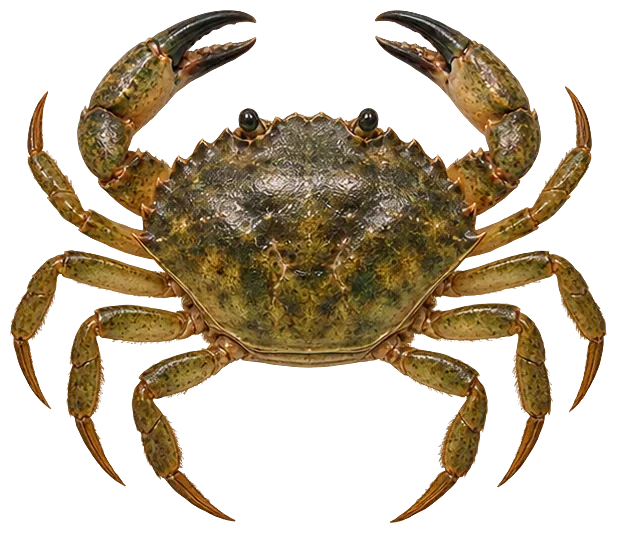
Animal · saltwater
European Green Crab
Carcinus maenas
How to spot it: Dark green to orange-red shell with five spines on each side of the eyes; back legs pointed, not paddle-shaped.
Where in CT: Common along the whole CT shoreline — under rocks and in marshes.
Why it matters: Eats young clams, oysters and scallops and digs up eelgrass.
What to do: Legal bait species (marine license). Use them for blackfish — just never move them into fresh water.
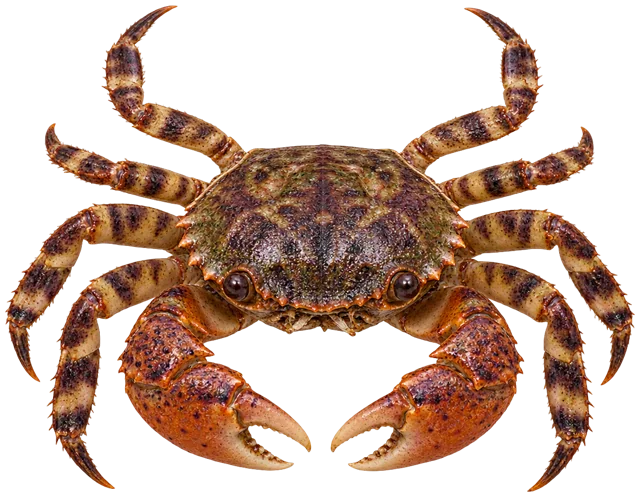
Animal · saltwater
Asian Shore Crab
Hemigrapsus sanguineus
How to spot it: Small, square shell with three spines on each side, banded legs and red dots on the claws.
Where in CT: Under nearly every rock along rocky CT shorelines and jetties.
Why it matters: Out-competes native crabs and eats young shellfish.
What to do: Legal bait species (marine license) and good blackfish bait.
📣 Report a sighting
- Freshwater: the CT AIS web app shows where invasives are documented and lets you report new sightings to the Office of Aquatic Invasive Species.
- Marine (mitten crabs and others): DEEP’s Marine Aquatic Invasive Species (MAIS) Survey, or DEEP Marine Fisheries at 860-434-6043.
- Or tell us with Report an issue and we’ll pass it along and flag the water on our map.
📜 Official sources — we check these pages every week and update this guide when the rules change. Last checked October 28, 2026.
- CT DEEP — Aquatic Invasive Species (updated May 2026)
- CT DEEP — Examples of Aquatic Invasive Species in CT (updated October 2024)
This page is a plain-language summary. The official rules always win — confirm before you go.